Transdisciplinary collaboration
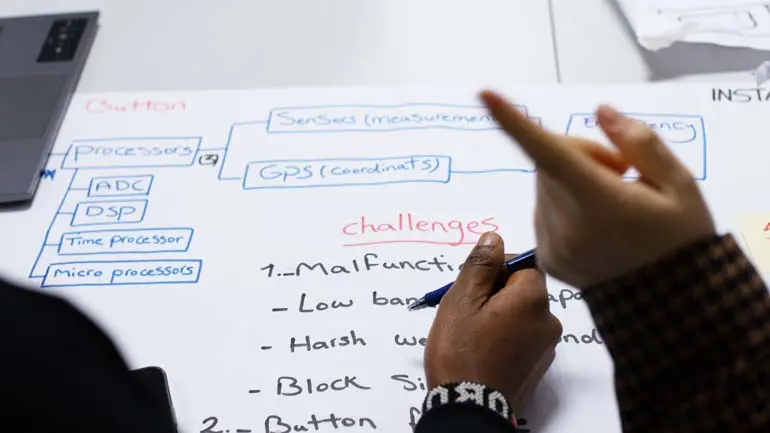
We will develop a framework for close collaboration between engineers, AI-assisted agents, managers, businesses and others to create solutions that organisations and society need.
Contact
What do we research?
«Transdisciplinary collaboration» is one of the research projects in SFI CELECT. We research these areas:
Ecosystem-based business model innovation. Businesses succeed better when they see themselves as part of a larger ecosystem, not as isolated actors. We develop methods that help companies find key actors and roles in their ecosystem, create new business models and collaborate and learn across disciplines.
Change management for AI and digitalisation. Adopting artificial intelligence (AI) is as much about people as it is about technology. We are investigating how companies can develop adaptive strategies for change management, leadership practices that support the integration of artificial intelligence and digital systems, as well as models for dealing with rapid and unforeseen shifts in technology and the market.
Cross-functional collaboration to solve complex problems. Innovation requires collaboration between technologists, specialists, users, managers and external partners. We will develop a framework for businesses to succeed with such transdisciplinary collaboration.
Why is this important?
- Businesses are facing a demanding transition in which digitalisation, artificial intelligence (AI), green technology and unpredictable markets are changing how we develop products and services.
- Many organisations find it difficult to collaborate effectively across disciplines, and new technologies and ways of working meet resistance from established processes and structures.
- To succeed in this reality, we need transdisciplinary leadership – a form of leadership that makes it possible to collaborate effectively across disciplines, value chains and organisations.
We work closely with partners from industry and the public sector to address precisely these challenges.
We will help organisations develop more robust business models, succeed with artificial intelligence and digital transformation, and build leadership and collaboration methods that can withstand increasing complexity